what to do if someone is bleeding severely
Bleeding is usually pocket-sized in nature just can sometimes impose serious threat if a big vein or artery has been injured.
External Haemorrhage
Amputation
Crush injury
Olfactory organ Drain
Abrasion (Graze)
Punture wound
Internal Haemorrhage
External bleeding
Background
Generally, bleeding is of a small nature and includes pocket-size cuts, grazes, etc.
Still, bleeding may be severe and life threatening if a large vein or artery has been injured – eastward.1000. the jugular vein in the neck.
Some wounds are associated with other injuries beneath the skin – e.g. an organ injured past a stabbing; broken bones which have pierced the peel.
Symptoms and signs – Not all may be nowadays
- a wound with, or without, an embedded strange object
- pain from peel surface wounds
- bruising or discolouration of the pare
- loss of normal function in the injured area
- pale, common cold, sweaty skin
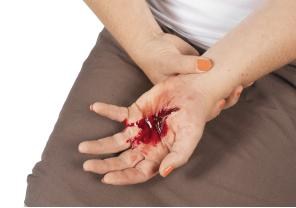
External bleeding
How you can help
1. Apply direct pressure to the bleeding wound
- Employ firm force per unit area over the wound. Use a sterile or make clean beefy pad and use it firmly with hand pressure level. Apply a bandage to keep the dressing in identify.
- If bleeding is astringent, DO NOT waste time looking for suitable padding, merely be prepared to utilize the patient's hand or your hand to hold the wound together if the patient is unable to do this unaided.
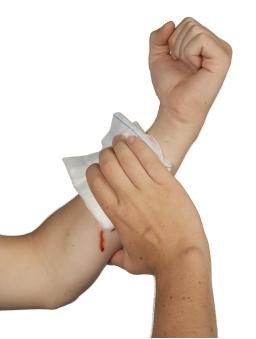
Use straight pressure to the bleeding wound
ii. Raise the injured area
- If the wound is on a limb, raise it in a supported position to reduce blood flow to the injured area.
- If an arm is injured, you could apply an arm sling or elevation sling.
Try to avoid any directly contact with the patient'south blood or other torso fluids. Use dispensable gloves if possible. If gloves are not bachelor, place your hands inside a plastic bag.
- If in that location has been any contact with claret or any other torso fluids, wash your easily or whatsoever blood splashed on the skin thoroughly with soap and h2o as soon as possible after the incident.
- If you are concerned almost a possible gamble of infection, obtain communication from your doctor equally soon as possible.
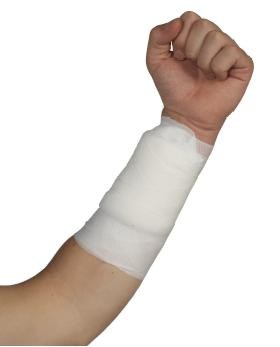
Raise the injured expanse
3. If a foreign body is embedded in the wound
- DO Not remove it merely apply padding on either side of the object and build information technology up to avoid force per unit area on the foreign body.
- Hold the padding firmly in identify with a roller bandage or folded triangular bandage applied in a criss-cross method to avoid pressure on the object.
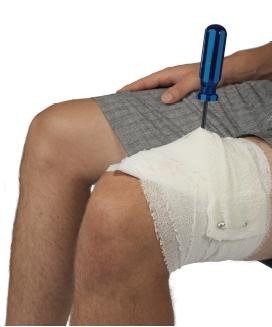
Do Not remove the strange object, but apply padding on either side.
4. Keep the patient at total rest
- Fifty-fifty if the injury involves the arm or upper office of the body, the patient should remainder in a position of greatest comfort for at least 10 minutes to help control the bleeding.
five. Seek medical assist
- If the wound appears to be minor and the patient is able to travel by auto, adapt an urgent appointment with a local doctor to appraise and treat the injury.
If the injury is severe or the patient is very unwell – call 111 for an ambulance as soon as possible.
While waiting for an ambulance to arrive, observe the patient closely for any change in status.
half dozen. If claret leaks through the pressure pad and bandage
- Apply a 2d pad over the first. Use a tea towel or similar bulky fabric and apply maximum pressure level to the surface area.
- For major uncontrolled bleeding quickly remove the blood-soaked pad and bandage and replace with a fresh bulky pad and bandage. The continuing haemorrhage may be due to the pad slipping out of position when the first bandage was applied.
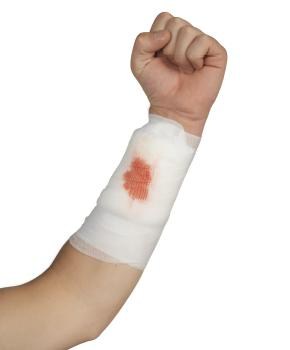
If blood leaks through the pressure pad and bandage
Wounds that need special intendance
Amputation
How you can help
Call 111 for an ambulance.
ane. Control whatever bleeding
- Use a beefy pad and apply it firmly to the bleeding area. Heighten if possible.
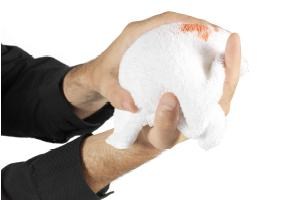
Control any bleeding
2. Recover the severed function
- If possible, gently place it into a plastic bag. Seal the bag with a little air inside to protect the severed function with a 'cushion' of air.
- Identify the inflated bag into a container or bucket of cold water to which several ice cubes accept been added.
- Ensure the severed part is transferred to infirmary with the patient.
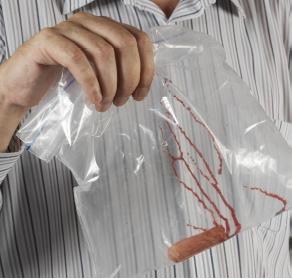
Recover the severed function
Vanquish injury
Background
A crush injury occurs from compression of large muscle groups and soft tissues past a heavy weight. The nearly serious sites for a shell injury to occur are the head, neck, chest, abdomen and thigh.
How you can help
Telephone call 111 for an ambulance.
1. Remove the crushing strength
- Remove the crushing force if possible because permanent tissue impairment may occur with severe crushing forcefulness.
- If the crushing forcefulness has been in place for some time, be prepared to give prompt showtime aid, considering removal of the burdensome forcefulness may cause a sudden plummet or deterioration in the patient'due south condition.
2. Treat the patient's injuries
- Assess and treat whatsoever injuries in society of their importance.
- Command whatsoever bleeding with a sterile pad practical firmly to the injured area.
- Assist the patient into the position of greatest comfort and use soft padding to provide support for the injured part.
- If a limb is involved, support and immobilise the injured area.
- While waiting for the ambulance to arrive, observe the patient closely for whatsoever change in condition.
Olfactory organ bleed
Background
A blow to the nose, flying at high altitude, or scuba diving may all cause a bleeding nose.
For a child, always check whether there is a foreign body present – e.g. a bead or money. If this has occurred, seek prompt medical advice and DO NOT try to remove the object yourself considering this may crusade further impairment.
If bleeding is due to a head injury – east.g. a fractured skull – call 111 for an ambulance urgently.
How you lot can assistance
1. Apply firm force per unit area, elevation and rest
- The patient needs to hold the head well frontwards and exhale through the mouth while pinching the entire soft part of the nose for 10 to 20 minutes.
- The patient must be sitting down and at total rest until the bleeding stops.
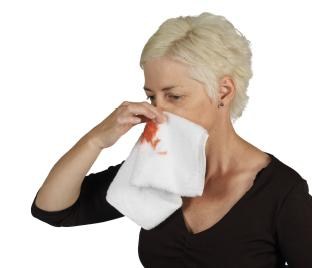
Apply house pressure level, top and rest
If bleeding continues after 20 minutes of force per unit area, continue the pressure and telephone call for an ambulance.
A cold compress can be used.
2. One time the bleeding has stopped
- Tell the patient non to blow their olfactory organ for a few hours because this may restart the bleeding.
Other wounds
An abrasion (graze)
How you can help
- Gently clean with soapy water or saline. If there are pieces of gravel embedded in the wound, ask the patient to try to remove them while the area is soaking in soapy h2o.
- Dry out the surface area well by blotting with gauze swabs or a pad of tissues.
- If a protective dressing is necessary, utilise a non-adherent sterile dressing and gear up information technology in place with a light roller bandage or tape.
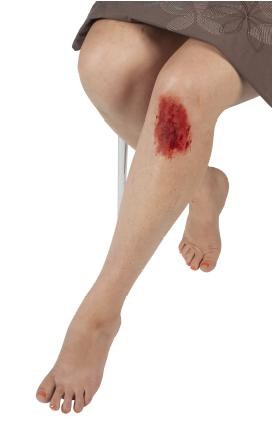
An abrasion (graze)
A puncture wound
How you can help
- Clean the wound with warm soapy h2o and allow information technology to penetrate the puncture track because tetanus spores may be trapped deep in the wound.
- Allow the wound to dry thoroughly in the air before covering it.
- If a protective dressing is needed, use a porous adhesive dressing and change it daily to keep the wound healthy and dry.
Contact a local doctor for advice about tetanus immunisation.
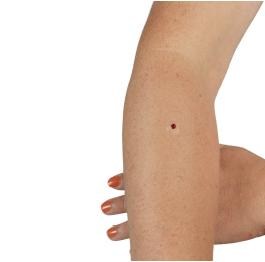
A puncture wound
Internal bleeding
Background
Internal bleeding is often difficult for the first aider to recognise. This type of bleeding tin
occur without an obvious wound and can be very serious equally information technology is difficult to finish without surgical intervention.
Internal bleeding occurs when blood vessels inside the torso are ruptured and blood escapes
out of the circulatory organization. It may follow such incidents every bit a blow to the caput, breast, or
abdomen due to a fall or being struck by a vehicle. Internal bleeding should be suspected when blood is seen in vomit, urine, sputum or faeces.
Symptoms and signs – Non all may be present
- rapid and 'gasping' breaths
- increasing thirst
- frothy cherry-red blood coughed up from the lungs, blood-stained vomit like 'java grounds', red or rust-coloured urine, or nighttime faeces like tar
- pale, cold, sweaty pare
How yous can assist
- Place the patient at total balance
- Assist the patient into the position of greatest condolement.
- Cover the patient with a blanket to maintain body heat.
- Place protective material underneath the patient if the surface is rough, common cold or hot – due east.1000. a glaze if the patient is lying on a road.
Telephone call 111 for an ambulance.
- While waiting for the ambulance
- Manage whatsoever other injuries.
- Ensure that all restrictive clothing has been loosened, especially at the neck and waist.
- Keep any bystanders articulate.
- Reassure the patient.
- Practise Non allow the patient to eat, drink or smoke.
Have the data on hand when yous need it the most.
Buy the Showtime Aid Handbook >>
Acquire the applied skills to help save a life.
Book a first aid grade >>



braithwaiteente1966.blogspot.com
Source: https://www.stjohn.org.nz/first-aid/first-aid-library/bleeding/
0 Response to "what to do if someone is bleeding severely"
Post a Comment